
Exploring Blockchain Applications Beyond Transactions in Building Trust Within Sports Betting Ecosystems
Blockchain technology extends its reach in sports betting ecosystems through mechanisms that establish verifiable fairness, data integrity, and process transparency, separate from simple payment processing. Operators integrate distributed ledger systems to record outcomes, enforce agreements, and validate randomness in ways that reduce reliance on single authorities. By August 2026 several platforms had deployed these tools across multiple leagues, allowing participants to review every step of a wager from placement through settlement.
Smart Contracts Enforce Betting Rules Automatically
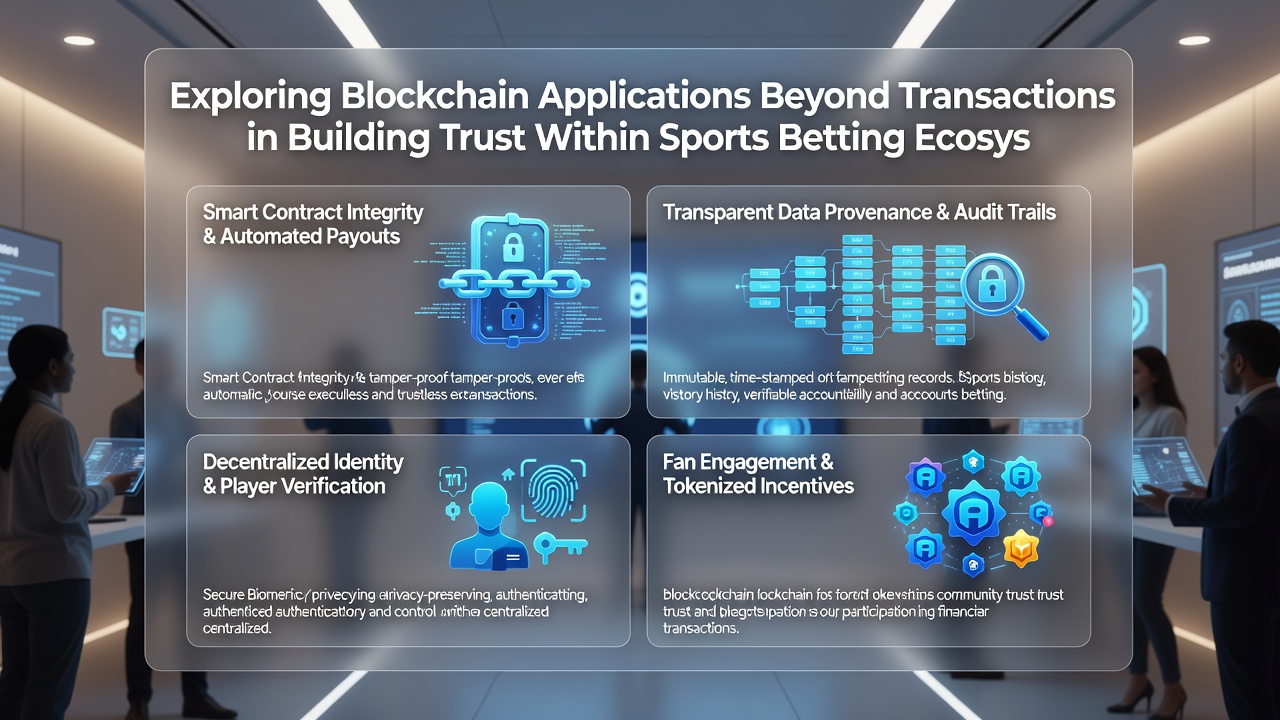
Smart contracts operate as self-executing code on blockchain networks, codifying payout conditions based on official results feeds. When a match concludes, predefined logic triggers transfers only if criteria match authenticated data, eliminating manual intervention that historically introduced disputes. Researchers at academic institutions have documented how these contracts handle complex scenarios such as dead heats or weather-related postponements through layered conditional statements. One implementation in European soccer markets uses multi-signature requirements so both operator and independent auditors approve rule interpretations before funds move.
Decentralized Oracles Supply Verified Results
Outcome data reaches betting systems via decentralized oracles that aggregate inputs from multiple independent sources rather than a single feed. This architecture resists tampering because discrepancies trigger consensus protocols before any record finalizes on the ledger. Studies from technology research groups show improved resistance to insider manipulation in leagues where results previously faced questions over timing or interpretation. Observers note that oracles now incorporate satellite imagery and sensor readings for outdoor events, cross-checking against human officials in real time during the 2026 season.
Immutable Records Create Audit Trails
Every bet placement, odds adjustment, and result verification leaves a permanent timestamped entry that anyone can examine without altering the chain. Regulatory bodies in Canada and Australia have referenced these ledgers during compliance reviews, citing reduced need for extensive paperwork because the data remains accessible and unaltered. Figures from industry reports indicate that platforms adopting full audit capabilities saw faster resolution of player inquiries, since disputed wagers could be reconstructed from the original sequence of entries. What's interesting is how this permanence extends to promotional bonuses and loyalty adjustments, which also receive cryptographic sealing to prevent retroactive changes.
Verifiable Randomness Strengthens Game Integrity
Provably fair algorithms generate random elements such as in-play multipliers or bonus round outcomes using blockchain-seeded values that users can independently check after the fact. The process combines public block hashes with private seeds, producing results that match published expectations yet remain unpredictable beforehand. Data from testing laboratories confirms that these systems pass statistical randomness evaluations while allowing post-event recreation of the exact sequence. Platforms serving international markets adopted this approach more widely after 2025 regulatory updates in several jurisdictions required demonstrable fairness metrics beyond traditional certifications.
Decentralized Identity Supports User Verification
Participants manage portable credentials stored on blockchain networks, granting operators access to verified attributes without retaining full personal datasets centrally. This reduces single-point breach risks while satisfying know-your-customer requirements through selective disclosure. Government agencies across North America and Asia-Pacific regions have explored integration with national digital identity frameworks, creating pathways for cross-border betting that maintain compliance. Those who've examined pilot programs report smoother onboarding flows because repeated document uploads become unnecessary once initial attestation occurs on the ledger.
Current Implementations and Geographic Spread
By August 2026 adoption patterns revealed stronger uptake in markets with clear technology-forward regulations, including parts of the European Union and select Australian states. Trade associations such as the American Gaming Association have tracked pilot projects that combine ledger-based verification with existing licensing structures. Meanwhile, research institutions in Singapore documented efficiency gains in dispute handling when all parties reference the same immutable dataset. The approach complements rather than replaces centralized oversight, providing an additional layer that regulators can query directly.
Conclusion
Blockchain components focused on verification, consensus, and automated enforcement continue to reshape how trust forms in sports betting environments. These applications operate alongside traditional systems, supplying independent checks on data accuracy and process execution. As more jurisdictions evaluate the technology through 2026 and beyond, documented implementations offer measurable indicators of reduced friction in verification tasks while preserving regulatory access to necessary records.