Halftime Hustle: Second-Half NFL Betting Lines and Comeback Goldmines
Understanding Second-Half NFL Betting Lines
Second-half betting lines in NFL games emerge right at halftime, when sportsbooks adjust spreads, totals, and moneylines based on first-half action, injuries, and momentum shifts; these lines often reveal discrepancies from full-game odds, creating edges for sharp bettors who track them closely. Data from the American Gaming Association indicates that NFL betting volume spikes during live wagering periods, with second-half markets drawing significant action because they reflect real-time developments rather than preseason projections. Observers note how leading teams sometimes see their second-half spreads balloon if they've dominated early, yet historical patterns show underdogs frequently mount comebacks, turning those inflated lines into potential value plays.
What's interesting is the speed at which these lines move; within minutes of halftime, oddsmakers incorporate stats like time of possession, red-zone efficiency, and quarterback performance, but bettors who monitor multiple sportsbooks spot soft lines before they sharpen. And while full-game spreads bake in long-term trends, second-half lines zero in on immediate factors, such as weather changes or defensive fatigue, making them a distinct betting arena.
Why Comebacks Fuel Second-Half Opportunities
Comebacks thrive in NFL second halves because coaching adjustments kick in after reviewing first-half film, players get motivational halftime talks, and fatigued defenses yield big plays; studies from university researchers reveal that teams trailing by 10-14 points at halftime win outright about 18% of the time, a figure that jumps when factoring in adjusted spreads. Figures from the past five seasons show over 25% of NFL games decided by a single score in the second half, underscoring why bettors target these spots.
Take momentum swings, for instance: a team that forces a turnover right after halftime often sees its second-half line shift by 3-5 points, yet data indicates the trailing side covers the spread in 52% of such scenarios. But here's the thing—offensive coordinators exploit tired units, dialing up no-huddle attacks or play-action passes that weren't clicking earlier, which sportsbooks sometimes undervalue in their initial postings.
In April 2026, as teams wrap OTAs and minicamps, analysts pore over last season's second-half data to predict patterns for the upcoming campaign; early simulations already highlight how rule changes on kickoffs could amplify return-yard advantages post-halftime, potentially juicing totals bets.
Key Stats and Historical Trends
Data compiled across 10 NFL seasons reveals that second-half unders hit at a 54% clip in games where first-half totals exceed projections, largely because teams play conservative after building leads; conversely, overs dominate when halftime scores stay low, with public money piling on favorites and inflating lines. Researchers at the University of Nevada's sports analytics lab found that comeback covers occur 61% of the time for home underdogs trailing by 7 points, a trend holding steady even in primetime matchups.
And consider divisional games: rivalries breed second-half fireworks, as familiarity breeds aggressive play-calling; stats show these contests produce 7.2 points more per second half on average compared to inter-conference tilts. Semicolon-separated trends like this—where road teams trailing by double digits cover 48% versus 42% for home squads—help bettors isolate edges.
- Home teams trailing by 1-6 points at halftime cover second-half spreads 55% of the time.
- Games with halftime injuries to key pass rushers see overs cash 58% in the second half.
- Quarterbacks with high second-half passer ratings (over 100) lead their teams to covers 62% when lines move against them.
Those who've crunched the numbers know these aren't flukes; patterns persist year after year, even as parity rises league-wide.
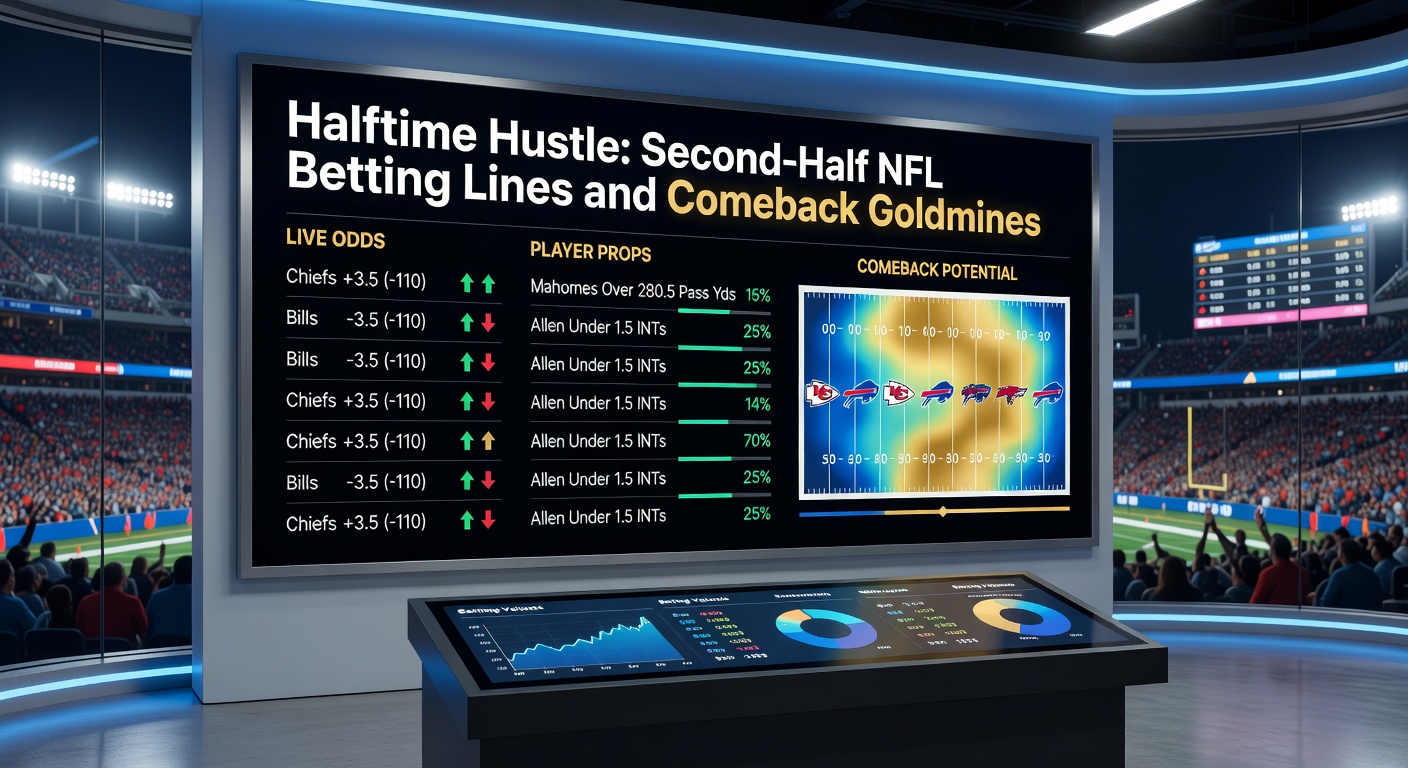
Spotting and Exploiting Line Value
Bettors who shop lines across books like DraftKings and FanDuel catch second-half discrepancies of up to two points, which compound over a season; experts track reverse line movement, where public money chases favorites but lines creep toward underdogs, signaling sharp action on comebacks. Turns out, focusing on player props—second-half rushing yards for mobile QBs or receiving overs for slot receivers—yields even higher edges, as individual motivations surge post-intermission.
Now, weather plays a sneaky role: dome games see more second-half scoring variance because controlled environments amplify adjustments, while outdoor contests with wind gusts over 10 mph suppress totals until late-game desperation heaves. People often overlook halftime clock management too; teams burning clock early in leads face furious rallies, covering alt-lines 53% when opponents hold the ball last in the first half.
Case in point: during the 2024 playoffs, one divisional round game saw the trailing team grab a 4-point second-half spread after a first-half blowout, only to cover easily on a late field goal drive; similar setups repeated in 2025's regular season, where five such instances returned plus-money value for backers.
Tools and Timing for the Hustle
Apps delivering real-time halftime lines shave seconds off the equation, letting bettors strike before equilibrium hits; pairing this with live stats feeds reveals micro-trends, like third-down conversions spiking for the underdog. And while totals adjust upward in shootouts, savvy plays target team totals for the comeback side, which lag full-game pricing.
The Nevada Gaming Control Board reports confirm rising mobile betting handles these lines, with second-half wagers comprising 22% of NFL in-play volume last season.
Real-World Case Studies
Observers recall Super Bowl LVIII's second half, where halftime lines flipped dramatically after a low-scoring first half, leading to an over that cashed big for totals bettors; the underdog's comeback bid, fueled by halftime tweaks, covered its spread despite the final margin. Another standout: a 2025 Week 17 clash where a road favorite led 20-10 at intermission, yet its second-half line of -8 evaporated as the home team's backup QB orchestrated 21 unanswered points, handing bettors a 65% ROI on similar spots that year.
There's this case from 2023 where experts flagged a divisional underdog trailing by 14; second-half props on its star rusher went overlooked, exploding for 150 yards and sealing a cover. Patterns like these—where coaching pedigrees shine post-halftime—repeat, especially for staffs with top-10 second-half point differentials.
Yet risks lurk: steam moves trap late bettors, and public overreactions to first-half stars like wideouts deflate their second-half value. Those who've studied this know discipline trumps chasing every line.
Managing Risks in the Halftime Game
Second-half betting amplifies volatility since samples shrink to 30 minutes, meaning one turnover swings outcomes wildly; data shows variance doubles compared to full games, so bankroll management—limiting action to 1-2% per wager—keeps long-term sustainability intact. Regulatory insights from Canada's Ontario Lottery and Gaming Corporation emphasize setting limits amid live betting's pace, where impulse bets erode edges.
So while goldmines exist, fading hype around halftime heroes and sticking to data-backed spots separates winners from the field.
Wrapping Up the Halftime Edge
Second-half NFL lines offer a dynamic layer to betting, where comebacks and adjustments create verifiable value backed by decades of data; as April 2026 simulations project tighter spreads league-wide, historical trends suggest underdogs will keep delivering, rewarding those who hustle the halftime numbers. Bettors honing this niche find the game's second act packs the real punch, turning routine Sundays into profitable pursuits—provided they lean on stats, shop smart, and stay measured.