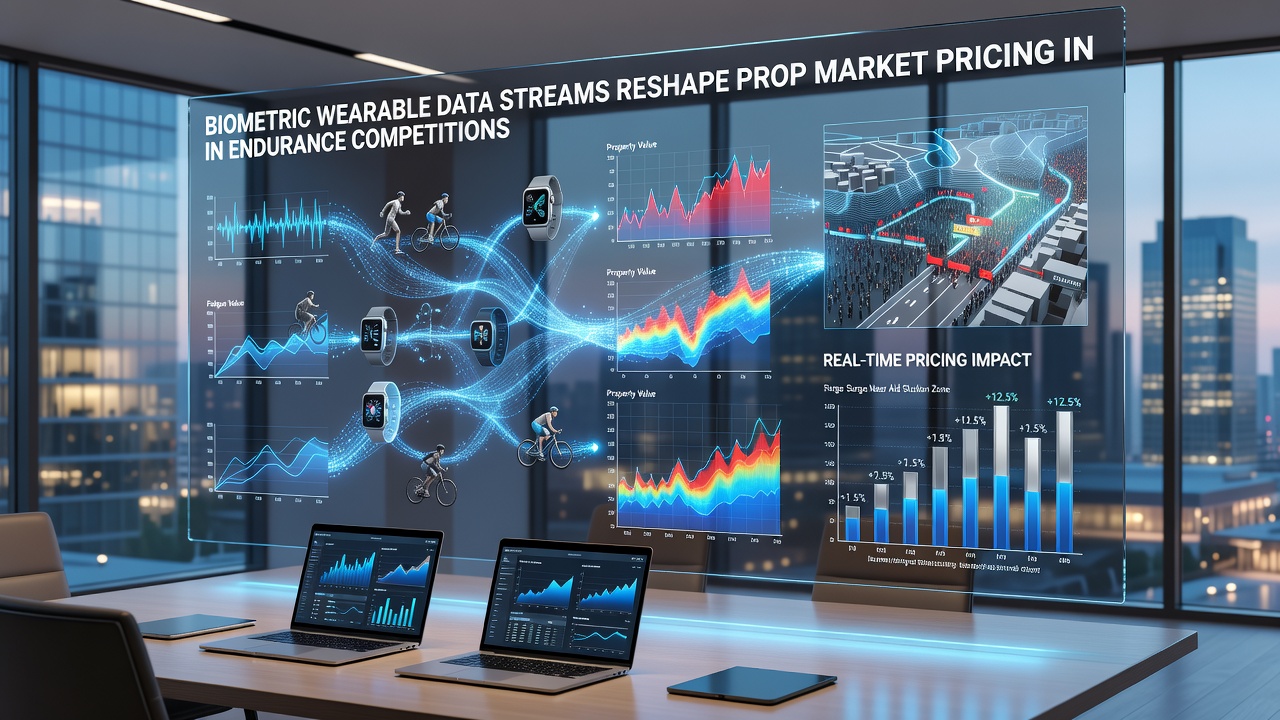
How Biometric Wearable Data Streams Reshape Prop Market Pricing in Endurance Competitions
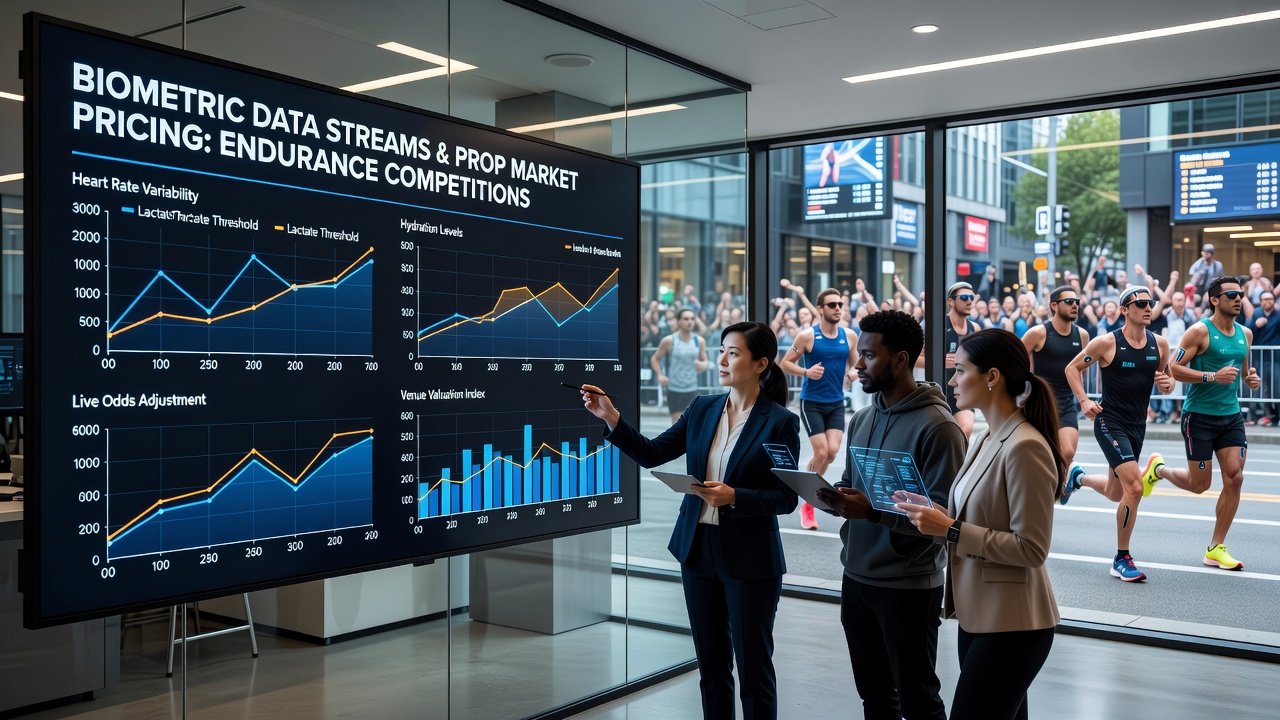
Endurance competitions such as marathons, Ironman triathlons, and ultramarathons generate prop markets that focus on individual performance thresholds including finish times, split paces, and recovery indicators, and biometric wearable data streams now supply the raw inputs that operators use to refine those odds. Devices track continuous heart rate variability, oxygen saturation levels, stride length consistency, and core temperature fluctuations, which feed into algorithms that recalibrate probabilities before and during events. In June 2026 several major race organizers integrated live data feeds from sponsor-provided wearables directly into risk management systems, allowing prop lines on metrics like heart rate zones above 85 percent of maximum to shift within minutes of updates.
Data Inputs Driving Market Adjustments
Operators collect streams from chest straps, armbands, and smartwatches that record second-by-second physiological signals, then apply machine learning models trained on historical race archives to project outcomes. A runner whose resting heart rate variability drops below baseline thresholds on race morning triggers downward adjustments on under props for sub-three-hour finishes, because evidence from aggregated datasets shows elevated injury risk and reduced efficiency. GPS-derived elevation-adjusted pace data combines with these readings to create composite fatigue scores that influence live prop pricing on segment completions, such as climbing times on key hills or negative splits in the final 10 kilometers.
Real-Time Recalibration During Events
Once competition begins, satellite uplinks transmit biometric packets every 30 seconds, enabling bookmakers to modify prop offerings on the fly. A triathlete whose power output on the bike leg falls 15 percent below predicted wattage sees correlated increases in over lines for run-split times, since muscle glycogen depletion patterns documented in prior Ironman events correlate strongly with slower marathon segments. Observers note that these adjustments occur faster in European races where regulatory frameworks from the Malta Gaming Authority permit rapid line movement compared with stricter oversight in other jurisdictions.
Integration with Historical Performance Archives
Prop markets also draw on longitudinal datasets that pair wearable readings from training camps with race-day results, creating individualized baselines for each athlete. Researchers at institutions tracking over 12,000 endurance participants found that athletes maintaining heart rate recovery rates above 30 beats per minute in the first minute post-interval sessions finish races within 2 percent of their projected times 78 percent of the time. Operators incorporate these correlations when setting initial lines, then layer current stream data to fine-tune. One study released in early 2026 by an Australian research consortium demonstrated that combining wearable-derived sleep quality scores with pre-race cortisol estimates improved finish-time prediction accuracy by 11 percentage points over models relying solely on past results.
Regulatory and Technical Considerations
Governing bodies in several regions now require disclosure of data sources used for odds compilation, with the Canadian Pari-Mutuel Agency issuing guidelines in 2025 that mandate transparency around wearable-derived inputs for any market involving physiological thresholds. Technical standards developed by the Sports Tech Research Group at Loughborough University specify minimum sampling frequencies and encryption protocols to ensure stream integrity. These frameworks reduce disputes when prop outcomes hinge on metrics such as average cadence or hydration estimates derived from sweat-rate algorithms. Yet implementation varies, with some operators relying on third-party aggregators that normalize readings across device brands to maintain consistent pricing across international markets.
Case Examples from Recent Competitions
During the 2025 Ultra-Trail du Mont-Blanc, live biometric feeds from leading contenders showed elevated lactate thresholds in the final 20 kilometers, prompting immediate tightening of props on top-three placements. Similar patterns appeared at the Comrades Marathon in South Africa, where operators adjusted underdog finish-time props after stream data revealed unexpected recovery spikes during aid-station stops. These examples illustrate how granular physiological information narrows variance estimates and compresses margins on niche props that previously depended on broader statistical models. Industry reports from the European Gaming and Betting Association indicate that prop volume on endurance events rose 27 percent year-over-year once standardized wearable APIs became available to licensed operators.
Future Trajectory Through 2026 and Beyond
By mid-2026 several platforms began piloting predictive overlays that combine biometric streams with environmental sensors measuring wind, temperature, and humidity at course waypoints. Such integrations allow dynamic repricing of props tied to heat-stress indicators, which researchers link to measurable declines in running economy above 28 degrees Celsius. Academic papers published through the Journal of Sports Sciences continue to refine correlation coefficients between wearable metrics and race outcomes, supplying fresh calibration data that operators adopt within weeks of release. The result is a tighter coupling between physiological reality and market pricing that reduces opportunities for mispriced props while increasing the granularity of available wagers.
Conclusion
Biometric wearable data streams have become central to prop market operations in endurance competitions because they deliver continuous, individualized physiological measurements that refine probability calculations. From pre-race baseline adjustments through live event recalibrations, these inputs allow operators to align odds more closely with observed performance indicators. Regulatory developments and technical standards support wider adoption, while ongoing research supplies improved models for translating raw streams into actionable pricing signals. As device accuracy and data integration continue to advance, prop markets tied to endurance events will reflect an increasingly detailed picture of athlete condition and capability.