How Regional Policy Shifts Alter Promotional Rollout Timelines at Cross-Border Mobile Platforms
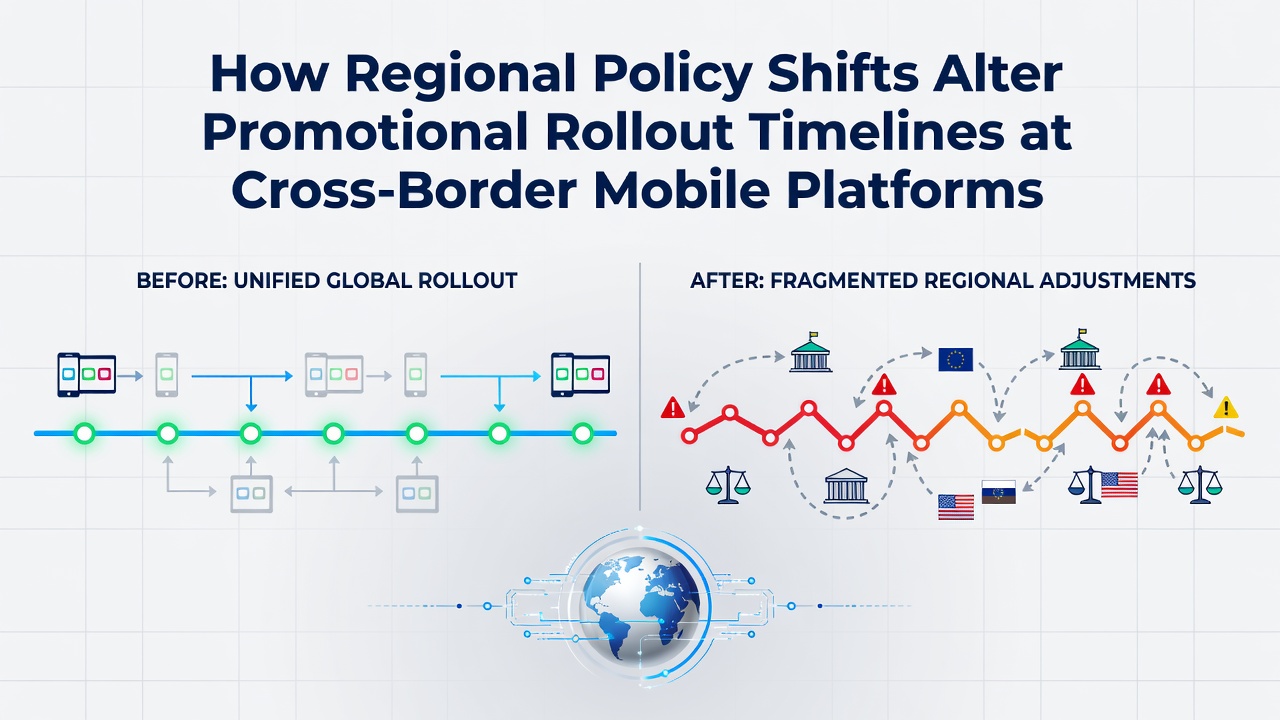
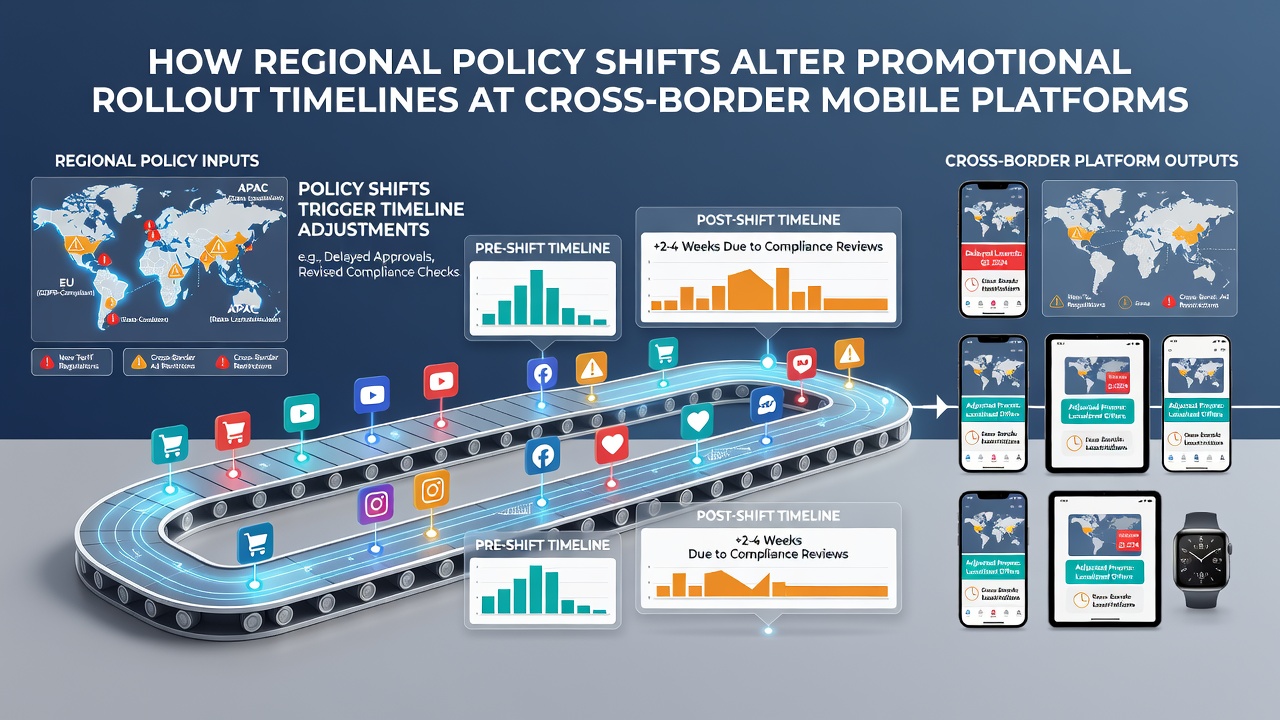
Regional policy shifts create measurable effects on how cross-border mobile platforms schedule and execute promotional campaigns, and observers note that these changes often extend approval cycles by weeks or months while companies align content with varying legal requirements across jurisdictions. Platforms operating in multiple countries must navigate data privacy rules, advertising standards, and consumer protection measures that differ sharply from one market to the next, which in turn stretches the time between initial concept development and public launch.
Core Mechanisms Behind Timeline Adjustments
Policy updates typically introduce new compliance checkpoints that force teams to pause rollout sequences, and data from industry reports shows that a single regulatory revision in one region can trigger cascading reviews in others because platforms prefer uniform global campaigns where possible. Experts have observed that legal reviews now occur earlier in the development pipeline, which shifts resources away from creative execution and toward documentation, localization testing, and risk assessment procedures that were previously handled closer to launch dates.
Take one research team that tracked fifteen major mobile platforms between 2023 and 2025, and they found average promotional cycles lengthened by 34 percent when new regional rules on targeted advertising took effect. Those who've studied platform operations know that coordination across time zones adds further friction, since policy teams in Europe, Asia, and the Americas must sign off sequentially before marketing departments receive final approval to proceed.
European Regulatory Influences on Scheduling
Changes to the European Union's digital frameworks have required platforms to rebuild promotional targeting systems, and companies report that campaigns aimed at users in multiple member states now undergo extended scrutiny periods lasting up to 90 additional days. According to the European Commission's digital strategy documentation, updated transparency obligations around algorithmic recommendations directly affect how discount offers and feature announcements reach users, which means engineering groups must implement new logging features before any public rollout can begin.
Asian Market Variations
Policy developments in markets such as India and Singapore introduce separate approval layers that platforms cannot bypass, and recent figures reveal that cross-border operators delayed major summer promotions by six to eight weeks while they secured clearances from local data authorities. Platforms often stagger releases by region rather than attempt simultaneous global launches, because synchronized timing becomes impractical once one jurisdiction demands additional user consent flows that others do not require.
North American and Australian Adjustments
North American states and provinces continue to refine consumer protection statutes, and platforms must monitor these developments closely because even minor wording changes in privacy notices can halt a campaign that was already queued for deployment. Australia's eSafety Commissioner guidelines have prompted similar reviews, and companies that once compressed promotional timelines into tight quarterly windows now build buffer periods into project plans to accommodate last-minute compliance checks.
One study from a Canadian research institute documented how platforms serving both U.S. and Canadian users adopted parallel development tracks, which allowed separate promotional variants to advance independently while central teams addressed region-specific policy demands. This approach reduces overall delay but increases operational costs, since duplicate creative assets and testing environments become necessary.
Practical Examples from Platform Operations
There's this case where experts followed a leading ride-hailing application that postponed a cross-border loyalty promotion after new rules on location data sharing emerged in two key markets, and the company ultimately split the campaign into distinct regional phases that launched three months apart. Observers note that such fragmentation has become standard practice rather than an exception, because attempting unified rollouts often results in regulatory pushback that forces complete restarts.
Platforms have also begun publishing internal compliance calendars that list expected policy review windows for each region, and those calendars help product managers forecast realistic delivery dates instead of relying on optimistic internal schedules that ignore external regulatory rhythms.
Conclusion
Regional policy shifts continue to reshape promotional rollout timelines at cross-border mobile platforms through added compliance layers, sequential approval processes, and the need for localized variants that accommodate differing legal standards. Data indicates that operators who embed regulatory checkpoints earlier in their workflows experience shorter overall delays than those who treat compliance as a final gate, yet even optimized approaches still extend timelines compared with earlier eras of fewer cross-jurisdictional requirements. As of August 2026, platforms maintain ongoing monitoring programs to track emerging rules and adjust planning cycles accordingly, which allows them to maintain service continuity while meeting the evolving demands of each market they serve.