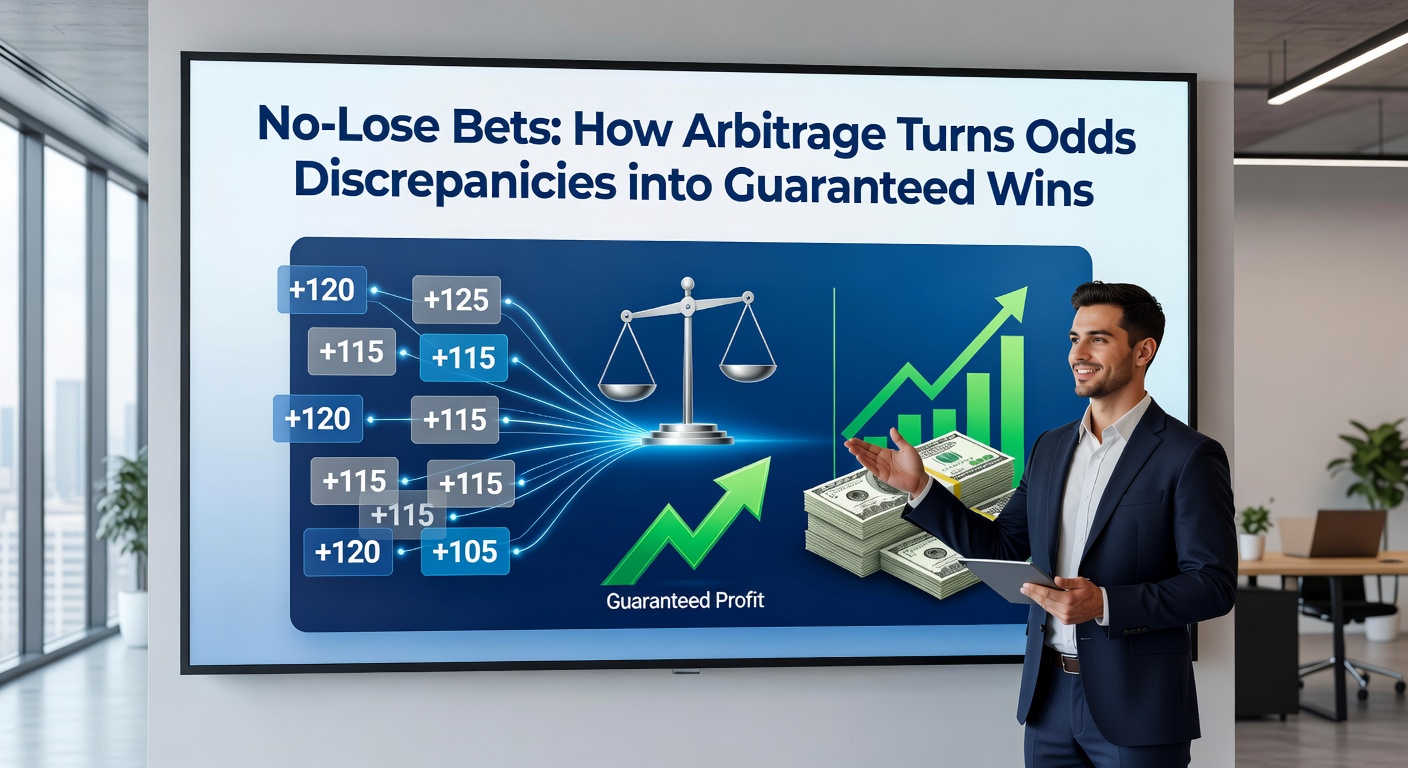
No-Lose Bets: How Arbitrage Turns Odds Discrepancies into Guaranteed Wins
Understanding Arbitrage Betting Basics
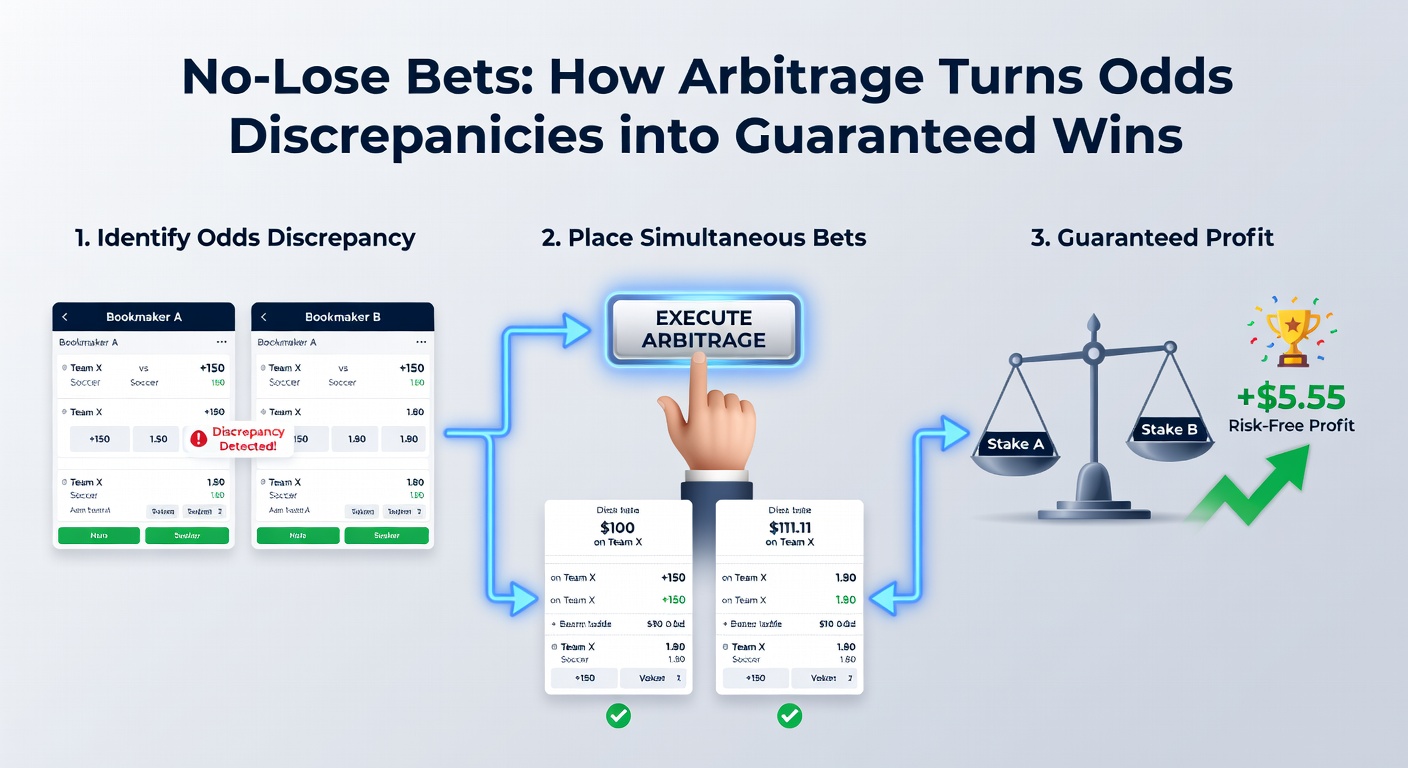
Arbitrage betting, often called "arbing" by those in the know, exploits differences in odds offered by various sportsbooks on the same event, allowing bettors to place wagers on all possible outcomes and lock in a profit no matter what happens. Sportsbooks set their lines based on their own data models, public sentiment, and risk management strategies; as a result, odds can vary significantly across platforms, creating temporary windows where the combined implied probabilities fall below 100 percent. Data from industry trackers shows these opportunities arise frequently, especially during high-volume events like major soccer tournaments or basketball playoffs, because bookmakers adjust lines at different speeds.
Take a straightforward two-outcome event such as a tennis match between Player A and Player B; if one book offers +110 on A (implying a 47.6 percent chance) while another lists -120 on B (implying 54.5 percent), savvy bettors calculate the total implied probability at roughly 102 percent normally, but when discrepancies push it under 100—like 98 percent—profit becomes possible by scaling stakes proportionally. Observers note this isn't gambling in the traditional sense since the math guarantees a return, typically between 0.5 and 5 percent per arb, although higher yields pop up during volatile periods such as live betting surges.
The Mechanics Behind Spotting and Executing Arbs
Finding these no-lose bets starts with comparing odds across dozens of books; manual hunters scan sites themselves, but most rely on automated scanners that ping APIs in real-time, alerting users to arbs as they emerge and vanish within minutes due to line movements. Once identified, bettors allocate funds precisely—for instance, in a three-way soccer arb (home win at 2.10 on Book X, draw at 3.60 on Book Y, away win at 4.00 on Book Z), stakes might split as $476 on home, $278 on draw, and $250 on away from a $1,000 bankroll, yielding $1,004 to $1,020 regardless of result after vig.
What's interesting is how volume turns small edges into real gains; researchers who've analyzed millions of lines, according to a study from the Sportsbook Review tools, reveal that consistent arbers hitting 50 opportunities monthly at 1.5 percent average profit can compound to substantial yearly returns, especially when rotating across sports like NBA, NFL, and international leagues where odds diverge most. And yet, execution speed matters hugely since books cancel mismatched bets or limit accounts spotting patterns.
But here's the thing: not all arbs are equal; "surebets" on two-ways dominate due to simplicity, while multi-leg parlays amplify discrepancies but spike risk from voids, and cross-market arbs—like betting over/under totals alongside moneylines—demand even sharper math skills.
Real-World Examples Across Sports
Consider a classic case from last year's UEFA Champions League final where one European book lagged on Manchester City's odds at +150 while a U.S. platform priced Inter Milan at +200; proportional bets netted 2.1 percent guaranteed, as reported by arb databases tracking the event. Or look at NBA games during April 2026 playoffs, when books like DraftKings and FanDuel diverged on player props amid injury news—say, LeBron James over 25.5 points at -105 on one site, under at +110 elsewhere—creating a tidy 1.8 percent arb for those who pounced before lines converged.
People who've mastered this often share stories of NFL spreads shifting post-hard-knock reports, or MLB moneylines varying due to weather models; one documented instance involved a college basketball arb during March Madness where five books' totals implied a 97.2 percent combined probability on over/under 140.5, pulling in steady profits for networks of bettors staking across jurisdictions. Turns out, even niche markets like esports or table tennis yield arbs regularly because smaller books chase volume without tight vig control.
Tools and Strategies Sharp Bettors Use
Arb scanners dominate the toolkit landscape; platforms like OddsJam or RebelBetting aggregate feeds from 100-plus books, filtering by profit threshold, sport, and stake size while calculating exact allocations to avoid rounding errors that eat margins. Figures from user reports indicate these services spot 200-500 arbs daily across global markets, with premium versions offering middling alerts—bets where outcomes overlap for double profit chances.
Those who've scaled operations often deploy VPNs for geo-restricted books, multiple accounts funded via e-wallets, and stake management to fly under radar; for example, capping bets at 1 percent of bankroll per book prevents flags, although data shows high-volume arbers still face restrictions eventually. Now, with AI-driven line predictors emerging, scanners evolve to forecast arbs before they fully form, particularly useful in April 2026's packed schedules blending MLB openers and Euro soccer.
Challenges and Risks in the Arb Game
Bookmakers fight back hard; they deploy pattern-detection software that flags round-robin arbers, leading to lowered limits, account closures, or "gubbing" where only poor odds remain available, as industry observers have documented across U.S. and offshore platforms. Voids hit too—canceled bets from official changes wipe potential profits, while exchange latencies or currency conversions nibble edges on international plays.
So while math promises no-lose scenarios, real-world friction like deposit delays or human error turns ideals sour; studies from the Alcohol and Gaming Commission of Ontario highlight how even regulated markets see complaints over such issues, urging bettors to diversify books and verify lines manually before staking large sums. It's noteworthy that tax implications vary—U.S. residents report all wins federally, whereas some jurisdictions treat arbs as business income requiring deductions.
Regulatory Landscape and Legality Worldwide
Arbitrage betting holds legal status everywhere sports wagering operates since it involves no insider info or match-fixing, just market inefficiencies; regulators in places like New Jersey affirm this through licensing rules focused on consumer protection rather than banning strategies, while Australian bodies emphasize responsible play amid rising arb adoption. Experts note that as states like North Carolina and Brazil expand legal betting in 2026, more arbs surface from new entrants lagging veterans, but compliance with age verification and funding sources remains non-negotiable.
That said, offshore books popular among arbers operate in gray areas; jurisdictions like Curacao license many, yet players bear risks from fund seizures if disputes arise, underscoring why regulated options grow in appeal despite tighter limits.
Conclusion
Arbitrage betting transforms odds discrepancies into reliable edges, rewarding those who master scanning, math, and evasion tactics amid evolving bookie countermeasures. With April 2026 bringing NBA playoffs, Masters golf, and IPL cricket, fresh opportunities abound for patient operators balancing risks against compounded gains. Data consistently shows disciplined arbers thrive long-term, proving that where lines differ, profit follows—provided execution stays sharp.