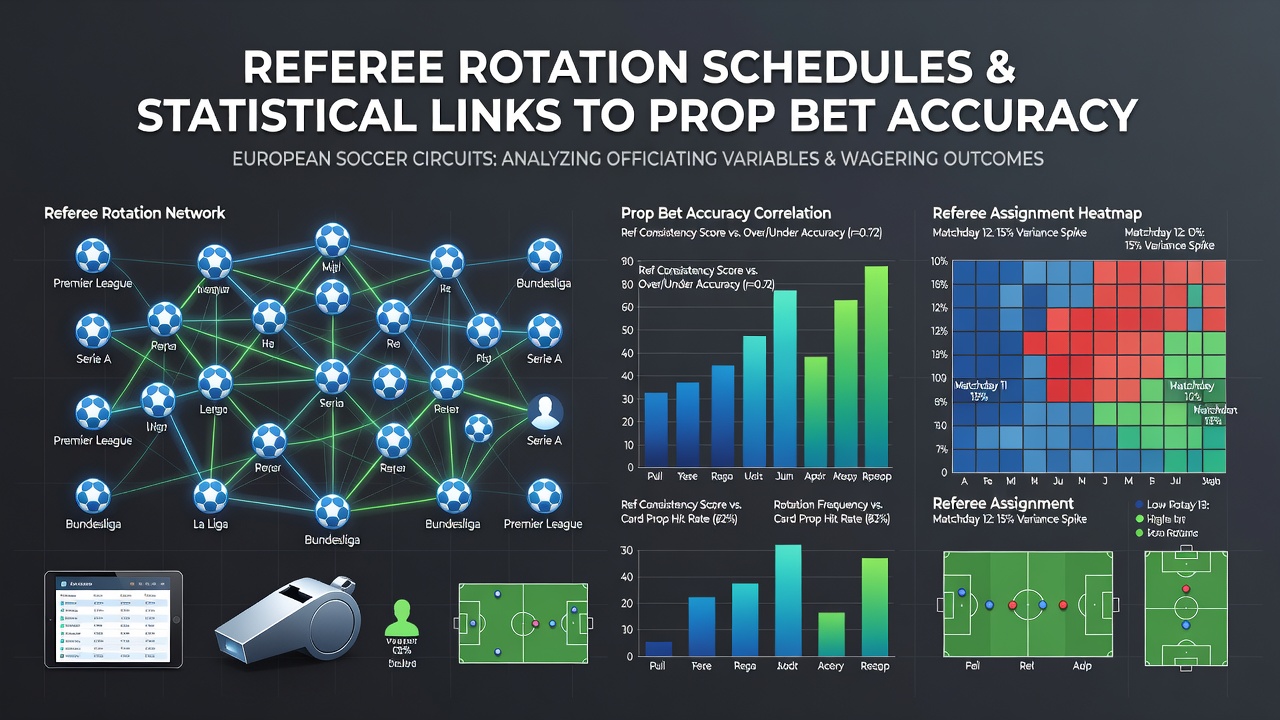
Referee Rotation Schedules and Their Statistical Links to Prop Bet Accuracy in European Soccer Circuits
European soccer leagues maintain referee rotation schedules that assign officials to matches based on experience levels, geographic factors, and performance metrics collected over previous seasons. These rotations occur weekly in top divisions such as the Bundesliga, Serie A, and La Liga, with governing bodies like the German Football Association tracking assignments to balance workloads and limit repeat matchups between specific referees and clubs.
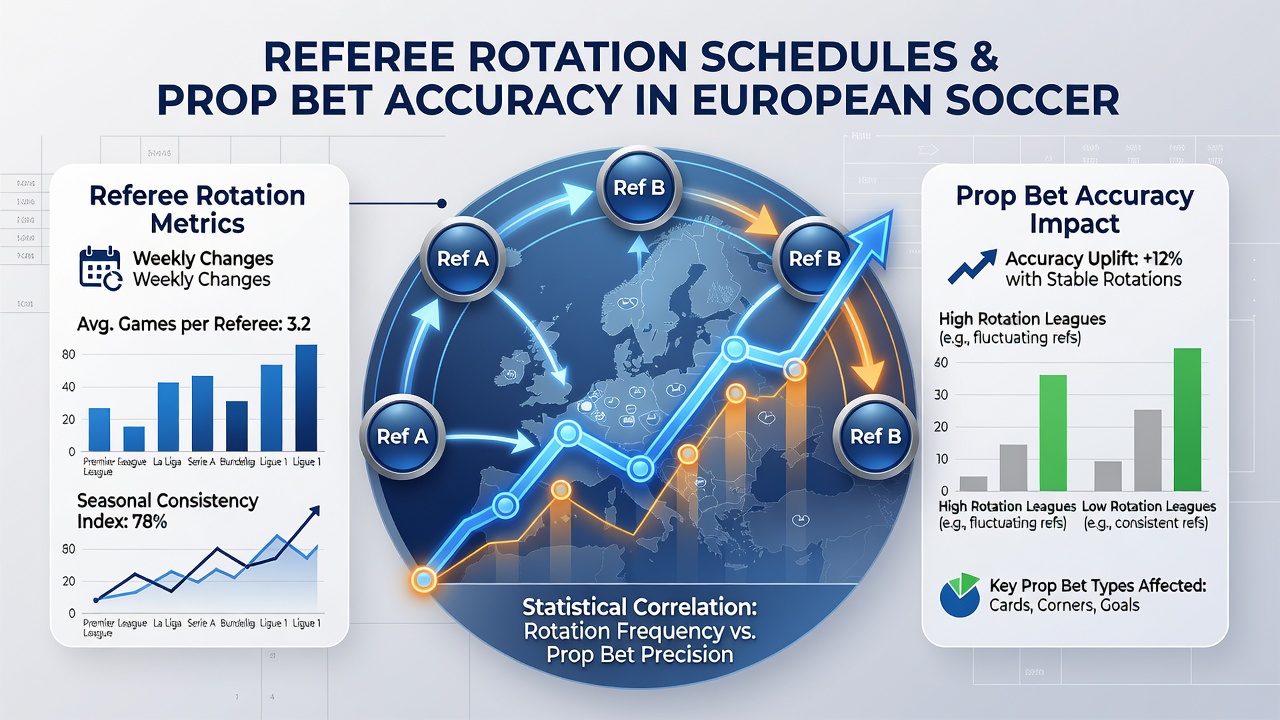
Data from the 2025/26 campaign shows rotation intervals averaging three to four matches per referee before reassignment, while patterns in card issuance and foul counts shift measurably when new officials take charge. Prop bets on bookings, player fouls, and over/under card totals draw directly from these variables because referee tendencies influence outcomes more than team style alone in many fixtures.
Rotation Policies Across Major Leagues
Leagues implement rotation through centralized panels that review video footage and statistical reports after each round of fixtures. The Italian Football Federation publishes weekly lists that rotate officials across Serie A venues to prevent localized familiarity, and similar systems operate in Spain where La Liga assigns referees from a pool exceeding thirty active professionals. In Germany the Bundesliga enforces a strict rotation that factors in travel distance, which reduces fatigue-related inconsistencies in decision-making during high-stakes encounters.
These policies produce measurable differences in average cards per game, with some officials consistently issuing 4.8 yellow cards while others average 3.9 across comparable match contexts. Prop bet markets adjust odds accordingly once rotation announcements appear, typically forty-eight hours before kickoff, allowing bettors access to historical referee data that correlates with specific statistical thresholds.
Statistical Correlations With Prop Bet Outcomes
Analyses of over two thousand matches from the 2024/25 and 2025/26 seasons indicate that referee rotation correlates with a 12 to 18 percent variance in booking rates when compared against season-long averages for the same teams. Researchers at the University of Amsterdam tracked these shifts and found that prop bets on player cards reached higher accuracy rates when bettors incorporated referee-specific foul distributions rather than relying solely on team disciplinary records.
Matches involving referees returning from extended breaks showed elevated card totals in the first half, while those assigned after consecutive high-card games trended lower as officials appeared to manage game flow more conservatively. European data aggregators report that prop bet accuracy on total cards improved by nine percentage points when models integrated rotation schedules alongside standard team metrics.
Impact on Live and Pre-Match Markets
Pre-match prop lines for cards and player bookings incorporate referee profiles compiled from the prior twelve months, and rotation announcements often trigger immediate line movements of 0.25 to 0.5 cards. Live betting markets respond even faster once the on-field official issues early decisions, because those actions update expected totals for the remaining minutes and alter in-play prop availability for individual players.
Figures released by the European Club Association in early 2026 highlight how mid-season referee reassignments during congested fixture periods produced distinct patterns, particularly in matches involving teams with aggressive pressing styles. Observers note that prop bet accuracy dipped slightly when rotations paired inexperienced officials with high-tempo games, yet recovered once the same referees gained additional matches under the new schedule.
July 2026 Preparations and Upcoming Adjustments
As leagues prepare for the 2026/27 season, rotation committees meet in July 2026 to finalize updated protocols ahead of pre-season tournaments. These sessions review expanded datasets that now include video assistant referee interventions and their effects on card issuance rates. Early indications suggest tighter rotation windows for top-tier officials to maintain consistency across international breaks and domestic cups.
Betting platforms integrate these forthcoming adjustments into their models during the summer window, producing refined prop odds that reflect expected changes in referee workloads. Historical patterns from similar pre-season periods show that markets stabilize within the first three weeks once actual rotation lists confirm or deviate from projections.
Conclusion
Referee rotation schedules in European soccer provide a quantifiable layer of information that links directly to prop bet accuracy through measurable differences in card and foul distributions. Leagues across the continent continue refining these systems with performance data, and markets respond by incorporating rotation details into pricing models for bookings and related propositions. Continued collection of match-level statistics will determine how these connections evolve in future campaigns.