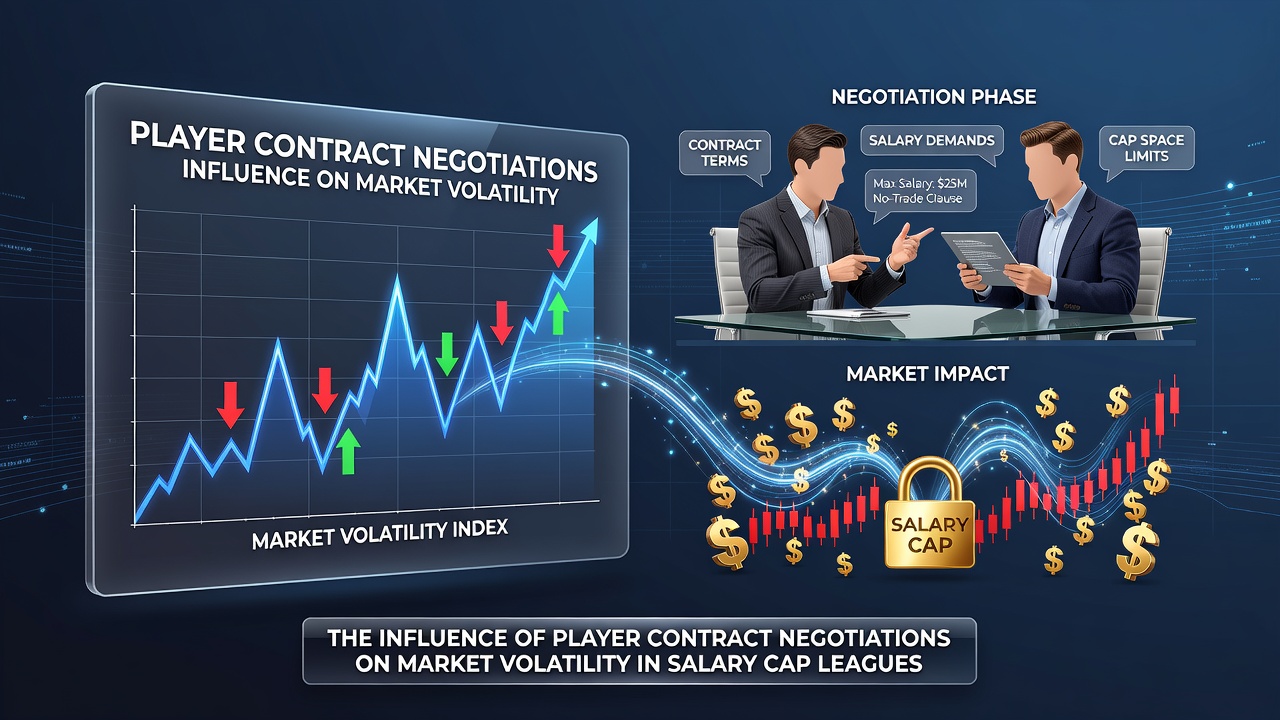
The Influence of Player Contract Negotiations on Market Volatility in Salary Cap Leagues
Salary cap leagues operate under strict financial limits that force teams to balance player talent with fiscal constraints, and contract negotiations introduce layers of uncertainty that ripple through roster planning as well as secondary markets tied to performance expectations. In leagues such as the NFL and NBA, these talks often extend beyond simple salary figures to include incentives, guarantees, and opt-out clauses that alter projected team payrolls in real time.
Mechanics of Salary Caps and Negotiation Timelines
Leagues set annual salary caps based on revenue projections, and teams must fit all player contracts beneath those ceilings while accounting for dead money from prior deals. Negotiations accelerate during free agency windows and before league deadlines, which creates concentrated periods of roster flux. Data from league offices shows that unresolved contracts frequently delay training camp preparations, and this timing matters because June 2026 marks the start of a new negotiation cycle across multiple North American leagues following recent collective bargaining adjustments.
Teams employ analytics departments to model long-term cap implications, yet player agents counter with competing valuations that hinge on comparable contracts from recent signings. These back-and-forth exchanges generate shifting projections about which players will remain available, and such fluidity feeds directly into market volatility surrounding team outlook metrics used by analysts and bettors alike.
Roster Uncertainty and Its Downstream Effects
When star players enter negotiations, teams face binary outcomes: secure the athlete at a premium or lose them to another club and receive draft compensation instead. Observers note that either path reshapes depth charts and forces mid-tier adjustments that affect projected win totals. Research from sports economics programs indicates that prolonged holdouts correlate with measurable dips in early-season performance metrics across salary-capped teams.
Contract structures that incorporate void years or back-loaded payments further complicate cap space calculations, and these technical details often remain opaque until deals finalize. As a result, external markets that price team futures experience repeated recalibrations whenever new information surfaces about signing bonuses or salary guarantees.
Market Volatility Patterns in Related Trading Environments
Betting markets and fantasy platforms track roster developments closely because contract outcomes influence playing time and statistical output. Figures released by industry tracking services reveal spikes in line movement volume during active negotiation windows, particularly when quarterbacks or point guards remain unsigned. Volatility manifests as wider spreads and fluctuating totals that reflect uncertainty about offensive schemes and defensive personnel groupings.
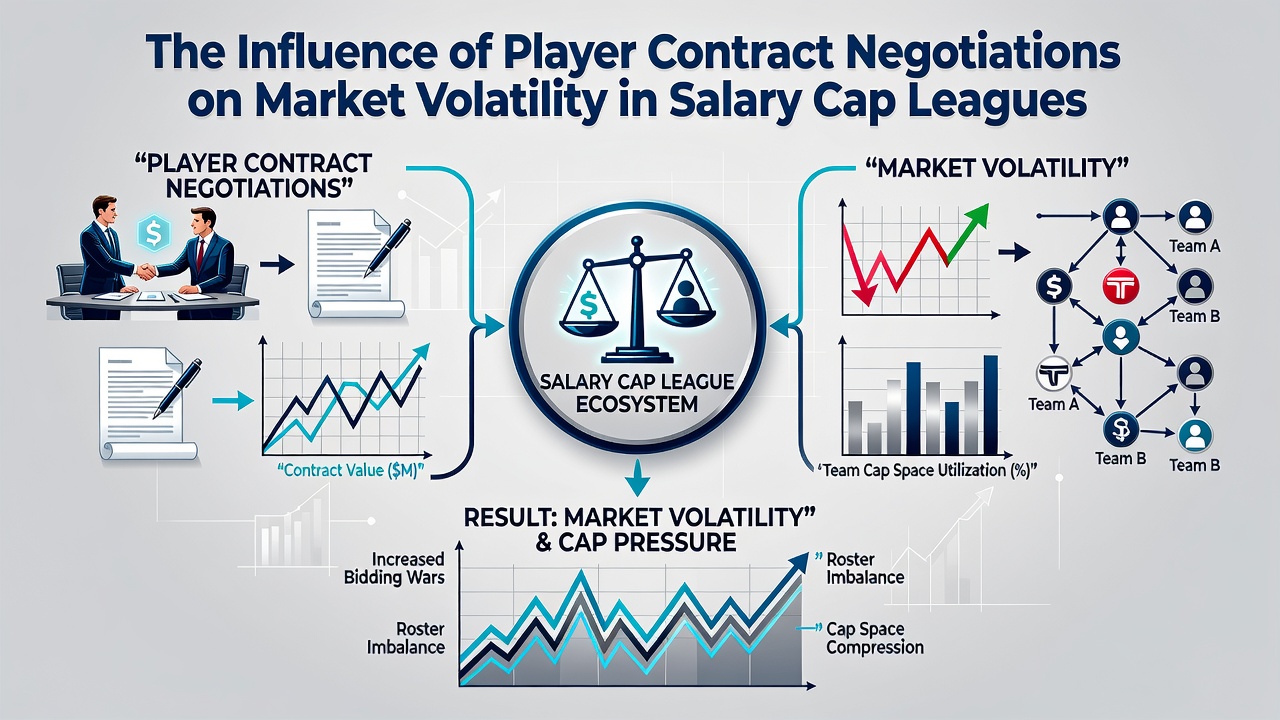
One documented case involved an NBA franchise that retained its restricted free agent only after matching an offer sheet, and the resolution produced an immediate contraction in projected point differentials for both the retaining team and its divisional rivals. Similar patterns appear in the NHL, where arbitration hearings scheduled for late June create last-minute cap crunches that cascade across waiver-wire activity and trade deadlines.
Comparative League Examples and Data Trends
The NFL's hard cap produces more abrupt roster cuts than the NBA's softer system, and studies compiled by North American sports research centers demonstrate higher year-to-year roster turnover rates under stricter limits. Australian researchers examining parallel salary-capped competitions have found comparable volatility spikes during restricted free agency periods, suggesting the phenomenon transcends single-league boundaries. In both environments, unresolved negotiations correlate with increased variance in season-long performance forecasts.
Teams that navigate these periods successfully often secure bridge deals or short-term extensions that preserve flexibility, yet such strategies require precise timing. Evidence suggests that clubs entering June 2026 with multiple expiring contracts face elevated risk of mid-season adjustments if negotiations extend past training camp reporting dates.
Conclusion
Player contract negotiations in salary cap leagues generate ongoing volatility by altering roster projections and payroll flexibility in ways that external markets must continually reassess. Data across multiple leagues shows that concentrated negotiation windows amplify these effects, and observers track outcomes closely because each resolution shifts team trajectories for the ensuing season. As salary structures evolve, the interplay between agent demands, team constraints, and league rules continues to shape both on-field composition and the markets that price those outcomes.